ARCHITECTURE 10 Amazing Examples of the Ottoman Mihrab in Istanbul
Jun 25, 2022 FEATURE, Architecture

Keep up to date with IAM's special offers, giveaways and news in your preferred format.
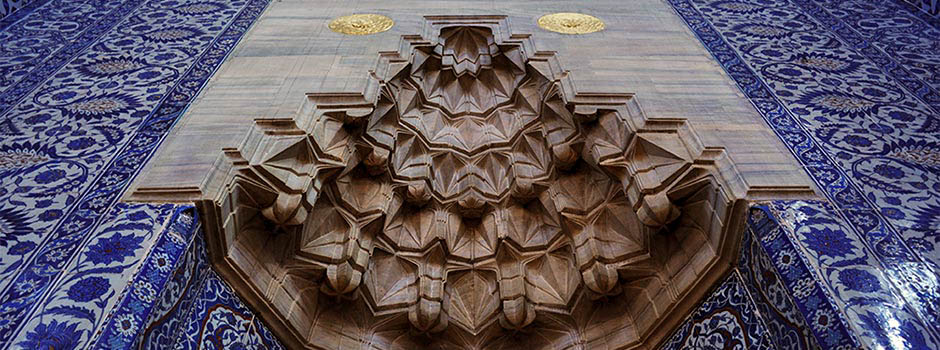
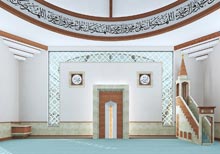
This architectural element did not exist in the time of Prophet Mohammed and was introduced at a later date, indicating the central place from which the imam leads the prayer. In this sense, mihrab has also a symbolic meaning.
Each period of development of Islamic architecture produced differences in the appearance of the mihrab. The Ottoman period takes on a standardized and highly recognizable shape. The upper part of a mihrab is the most characteristic since it is usually done in the form of plastic stalactites, or muqarnas. This decoration is a trademark of Islamic architectural sculpture, and in fact, the best examples of such art can be seen in an Ottoman mihrab.
-Islamic-Arts-Magazine.jpg) Mihrab at the Atik Ali Pasha Mosue in Istanbul / Photo © Islamic Arts Magazine
Mihrab at the Atik Ali Pasha Mosue in Istanbul / Photo © Islamic Arts Magazine
-Islamic-Arts-Magazine.jpg) Mihrab at the Molla Celebi Mosque in Istanbul / Photo © Islamic Arts Magazine
Mihrab at the Molla Celebi Mosque in Istanbul / Photo © Islamic Arts Magazine
-Islamic-Arts-Magazine.jpg) Mihrab at the Murat Pasha Mosque in Istanbul / Photo © Islamic Arts Magazine
Mihrab at the Murat Pasha Mosque in Istanbul / Photo © Islamic Arts Magazine
-Islamic-Arts-Magazine.jpg) Mihrab at the Sultanahmet Mosque in Istanbul / Photo © Islamic Arts Magazine
Mihrab at the Sultanahmet Mosque in Istanbul / Photo © Islamic Arts Magazine
-Islamic-Arts-Magazine.jpg) Mihrab at the Rustem Pasha Mosque in Istanbul / Photo © Islamic Arts Magazine
Mihrab at the Rustem Pasha Mosque in Istanbul / Photo © Islamic Arts Magazine
-Islamic-Arts-Magazine.jpg) Mihrab at the Sehzade Mosque in Istanbul / Photo © Islamic Arts Magazine
Mihrab at the Sehzade Mosque in Istanbul / Photo © Islamic Arts Magazine
-Islamic-Arts-Magazine.jpg) Mihrab at the Javuz Selim Mosque in Istanbul / Photo © Islamic Arts Magazine
Mihrab at the Javuz Selim Mosque in Istanbul / Photo © Islamic Arts Magazine
-Islamic-Arts-Magazine.jpg) Mihrab at the Dolmabahce Mosque in Istanbul / Photo © Islamic Arts Magazine
Mihrab at the Dolmabahce Mosque in Istanbul / Photo © Islamic Arts Magazine
-Islamic-Arts-Magazine.jpg) Mihrab at the Ortakoy Mosque in Istanbul / Photo © Islamic Arts Magazine
Mihrab at the Ortakoy Mosque in Istanbul / Photo © Islamic Arts Magazine
-Islamic-Arts-Magazine.jpg) Mihrab at the Nusretiye Mosque in Istanbul / Photo © Islamic Arts Magazine
Mihrab at the Nusretiye Mosque in Istanbul / Photo © Islamic Arts Magazine


Comments
Add a comment
Commenting is not available in this section entry.