ARCHITECTURE 10 Istanbul Mosques as a Testimony of Astonishing Architectural Achievement
May 20, 2019 FEATURE, Architecture

Keep up to date with IAM's special offers, giveaways and news in your preferred format.
Besides the Yeni Mosque, the Sultan Ahmed Mosque is the last great project of classical Ottoman architecture. The construction lasted about ten years, and it was completed in 1609 during the rule of Ahmed I. The floor plan is based on the model of the Shehzade Mosque. The architect was Mehmet Aga, an apprentice of Mimar Sinan. The mosque is located across Hagia Sophia and is one of the skyline symbols of Istanbul and a favourite tourist destination. It’s popularly known as the Blue Mosque for the richly decorated blue Iznik tiles. The central dome is supported by four huge pillars to give a special distinction of internal space. The Sultan Ahmed Mosque is also the only Ottoman mosque with six minarets.
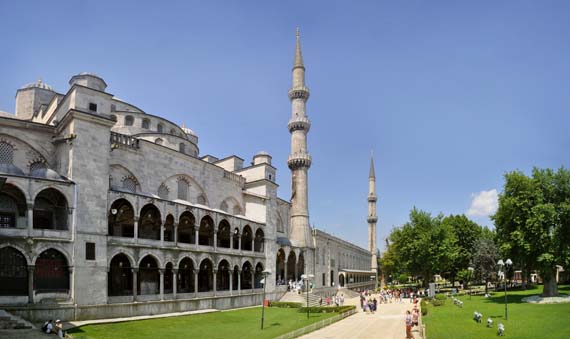 Sultan Ahmed Mosque. Photo © Islamic Arts Magazine
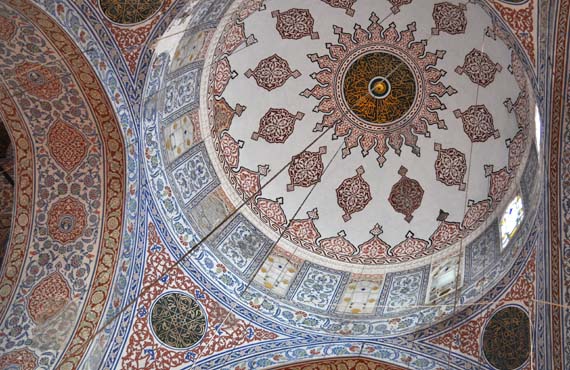 The dome of the Sultan Ahmed Mosque. Photo © Islamic Arts Magazine
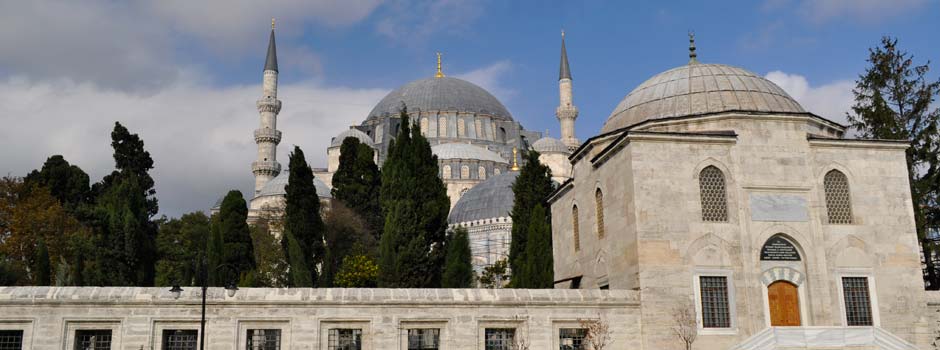
The most eminent architect in the 16th century was Mimar Sinan, who shaped the classical style. All mosques were very important but the masterpieces of his architectural achievements are the Suleymaniye Mosque in Istanbul and the Selimiye Mosque in Edirne (1570-1574). The Suleymaniye Mosque is one of the most monumental examples of classical Ottoman architecture. The mosque is decorated with Iznik tiles with stylized flowers and arabesque as the dominant motif. The Mosque is a significant architectural complex and includes turbets, madrassas, a hospital, a public kitchen, a bath and more. All the major mosque constructions in Ottoman architecture include additional facilities that cover the different needs of believers.
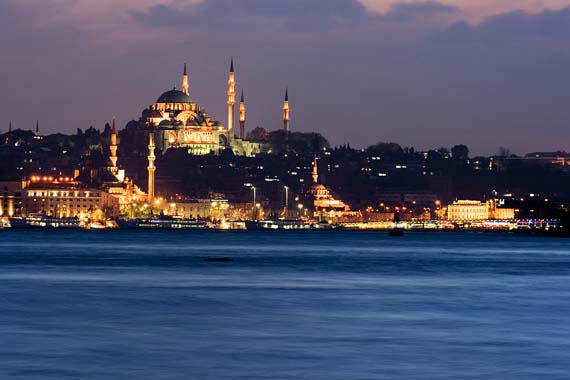 Suleymaniye Mosque. Photo by Amar Cudic
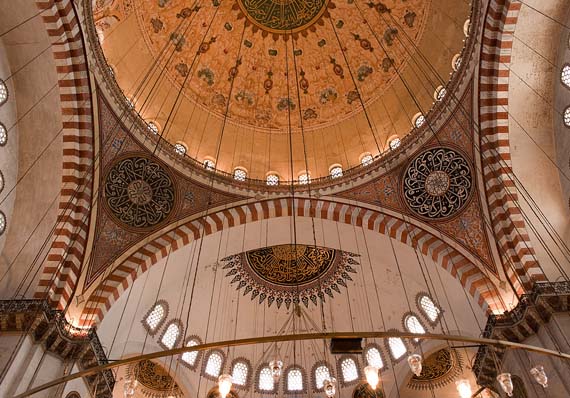 Suleymaniye Mosque. Photo by Amar Cudic
The Valide Sultan Mosque is an Ottoman imperial mosque located in the Eminonu district of Istanbul, near the famous Bazaar, called the Spice Bazaar. It was commissioned by Safiye Sultan, Sultan Murad’s III wife. The construction started in 1597 during the rule of Sultan Mehmet III and was completed more than half a century later in 1660. The architect who made the initial project was Davut Aga, an apprentice of Mimar Sinan, while its completion was done by Mustafa Aga. The floor plan of the Yeni Mosque was very similar to the Shehzade Mosque. It stands out with its elegant forms and rich interior decorations.
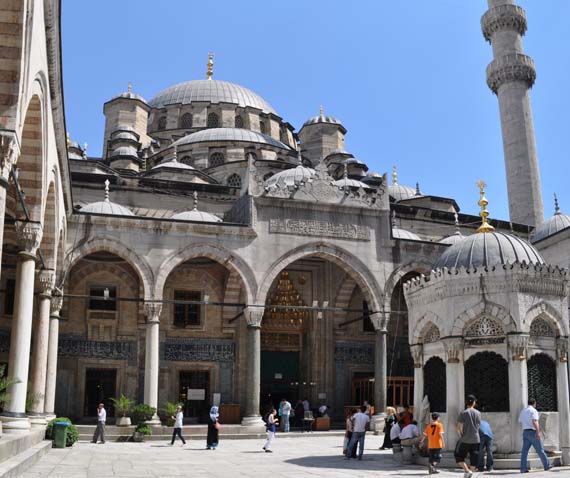 Yeni Mosque. Photo © Islamic Arts Magazine
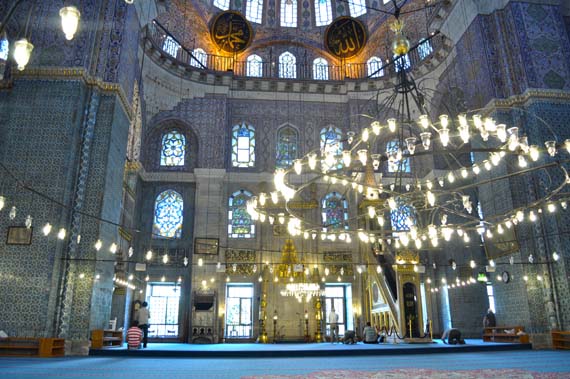 Yeni Mosque, interior. Photo © Islamic Arts Magazine
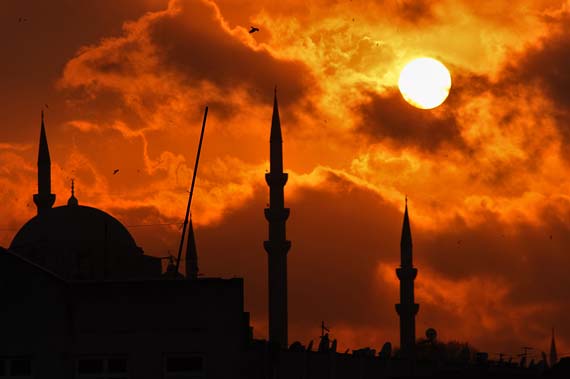 Yeni Mosque at sunset. Photo by Amar Cudic
The Bayezid II Mosque is an Ottoman imperial mosque located in the Bayezid Square area of Istanbul. It represents the best-known mosque which preceded the classical style. Located in the heart of the old town, next to the Grand Bazaar. The architect of this mosque was Mimar Hajrudin who created a number of very successful and well-known projects such as the Bayezid Mosque in Edirne. The construction of the Bayezid II Mosque began in 1500 and was completed in 1505. The design contains the central dome surrounded by semi-domes on all four sides. This mosque is currently under restoration.
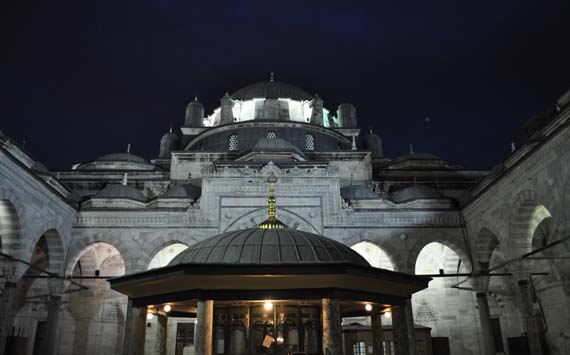 Bayezid II Mosque by night. Photo © Islamic Arts Magazine
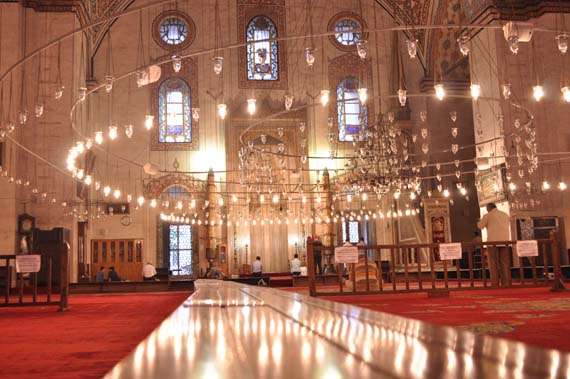 Bayezid II Mosque. Photo © Islamic Arts Magazine
One of the most important monuments of classic Ottoman architecture, the Shehzade Mehmed Mosque in Istanbul is comparable in size to other royal mosques built by sultans in Istanbul, or other centres, like Edirne and Bursa. However, this royal mosque, unlike most others, does not carry the name of a Sultan. It was built between 1543-1548 by Sultan Suleyman I, the Lawgiver. However, it was dedicated to his son, Prince Muhammed who died in 1543 at age 21. This makes the mosque unique and even today represents a moving symbol of a father’s love for his deceased son.
The mosque was built in the historic core of Istanbul, in Fatih square. It was built on what is called the third hill of Istanbul. Designed and built by Sinan, it was the famous architect’s first large mosque, since accepting the prestigious function of the first architect of the Ottoman empire in 1538. With the Shehzade Mosque he expresses his originality and even then, quite maturely, he presented what we now consider classic Ottoman architecture.
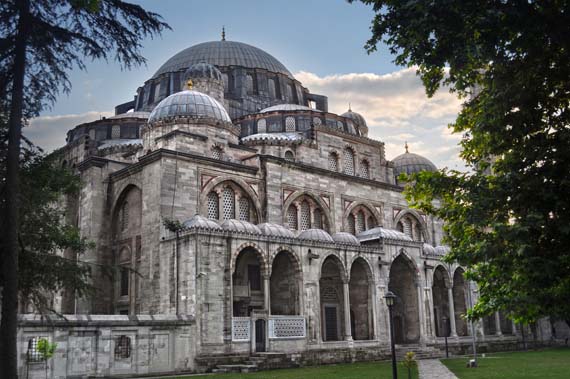 Shehzade Mehmed Mosque. Photo © Islamic Arts Magazine
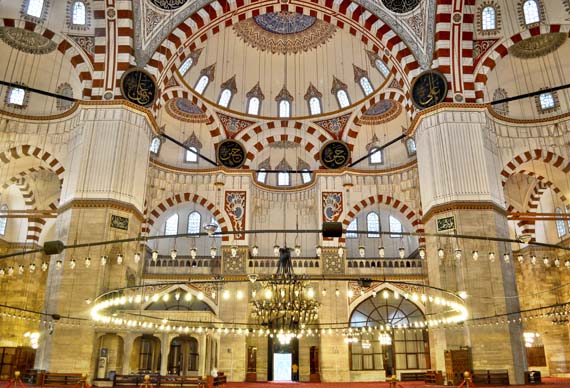 Shehzade Mehmed Mosque. Photo © Islamic Arts Magazine
The Yavuz Selim Mosque is the second oldest existent imperial mosque in Istanbul, overlooking the Golden Horn. The architect is assumed to be Ajem Esir Ali, who was originally a Persian. He was the main architect of the Ottoman empire before Mimar Sinan. His name was linked to two other famous mosques, the Selim Mosque in Konya and the Gazi Husrev-Beg Mosque, Sarajevo in Bosnia and Herzegovina. The interior plan of the mosque is a simple square room, 24.5 meters on each side, covered by a shallow dome, 32.5 meters in height. This mosque is perhaps the most striking example of how the Ottoman architects needed to cover the ground plan with a central dome, as much as possible. The floor plan is identical to the Bayezid Mosque in Edirne, especially as they both have two side rooms, connected with a central prayer hall.
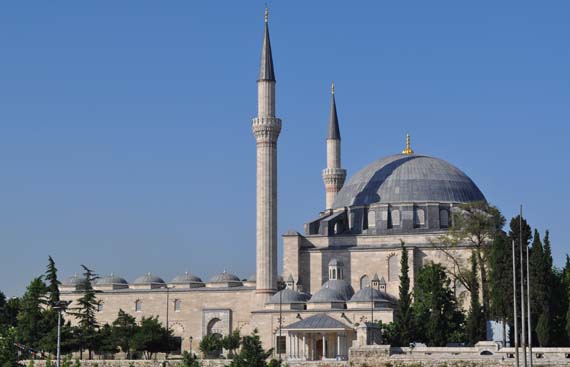 Yavuz Selim Mosque. Photo © Islamic Arts Magazine
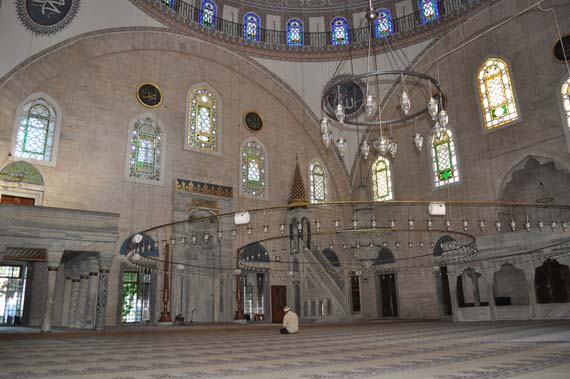 Yavuz Selim Mosque. Photo © Islamic Arts Magazine
The Murat Pasha Mosque is located in the Aksaray district of Istanbul. Built-in 1473 it is one of the oldest Istanbul mosques as it was built only twenty years after the conquest of the city. Its founder Murat Pasha was the vizier during the rule of Mehmed el-Fatih. The design belongs to the Bursa style, with a central prayer hall covered with two identical-sized domes. The concept of centralized space dominated by the main dome will be accepted much later during the classical style. The most interesting decorative-functional parts of the mosque are the stalactite decorations on the dome. External walls were made of stone and brick. Murat Pasha Mosque is the largest complex in the city donated by a vizier.
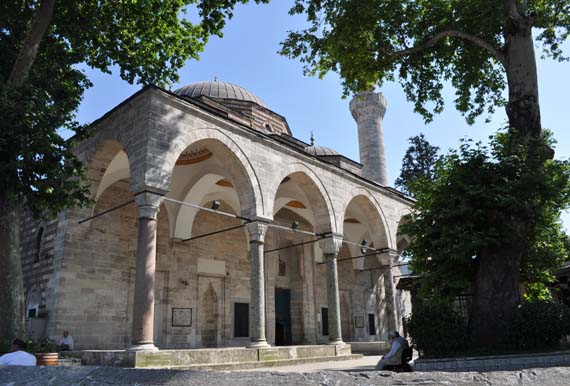 Murat Pasha Mosque. Photo © Islamic Arts Magazine
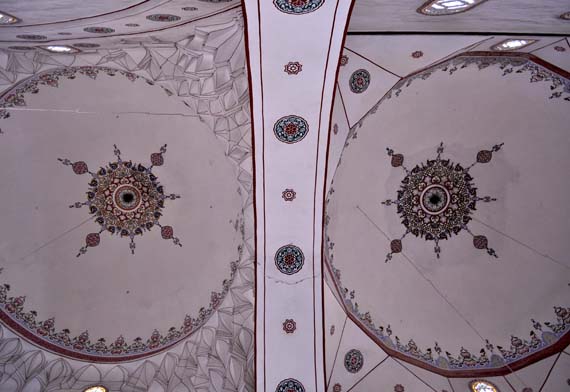 Murat Pasha Mosque, two domes. Photo © Islamic Arts Magazine
The Atik Ali Pasha Mosque is an old Ottoman mosque located in the Fatih district in Istanbul. It’s one of the lesser-known Istanbul mosques, but very important for understanding the development of the Ottoman style. It was built in the heart of Istanbul in 1497, close to the Bayezid II Mosque. The architect is not known, but we do know that at that time the main architect of the Ottoman empire was Mimar Hajrudin. The Mosque was commissioned by Grand Vizier Atik Ali Pasha who held that position from 1501 to 1503, and then again from 1506 to 1511. The floor plan has many similarities with the Fatih Mosque and the Bayezid II Mosque, especially when it comes to the relationship between the central dome and the dome that shelters the area above the mihrab.
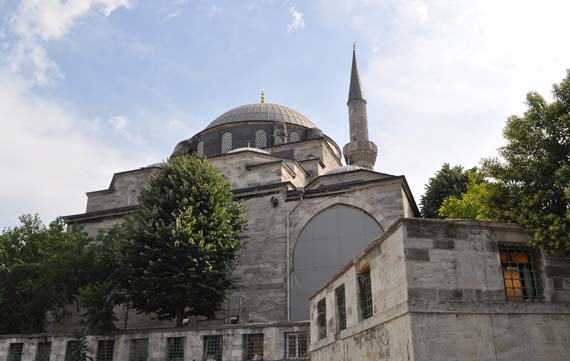 Atik Ali Pasha Mosque, two domes. Photo © Islamic Arts Magazine
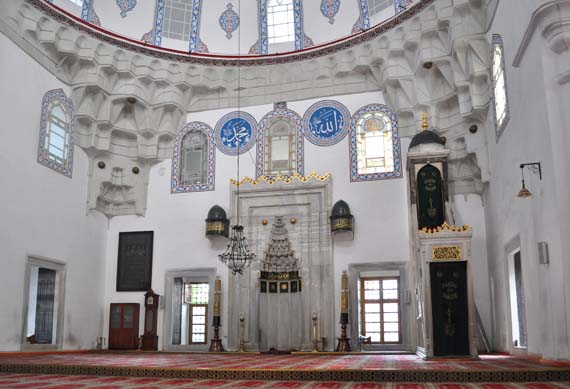 Atik Ali Pasha Mosque, two domes. Photo © Islamic Arts Magazine
The Mosque was commissioned by Mehmed Pasha Sokolovic, the most important Ottoman Grand Vizier in history, of Bosnian origin. He was Grand Vizier for three sultans: Suleyman the Lawgiver, Selim II, and Murad III. The Mosque was built in 1572 in the Kadirga district in Istanbul. The architect was Mimar Sinan, who claimed that this is his most successful smaller mosque. Inside the mosque complex is the famous Madrasa. The proportions of the mosque are in harmony so the entire project leaves a remarkable impression on the visitor. The central dome and four corner domes dominate the space. The interior of the Mosque is famous for its large quantities of exquisite Iznik tiles, set in a very wide variety of blue and green floral designs, with panels of calligraphy presenting white letters on a blue background which decorate the mihrab wall. The panels were painted with hatayi ornaments (large stylized flower patterns) and represent the highest level of ceramic tile art.
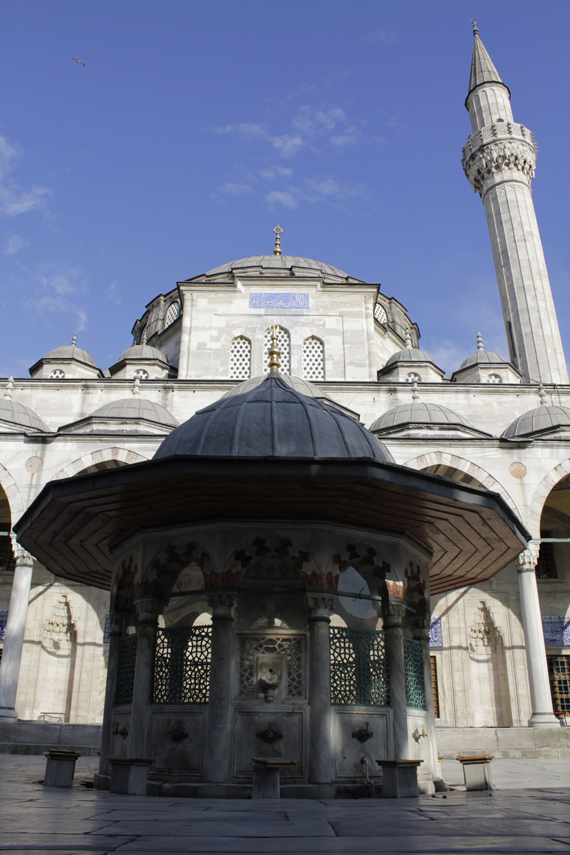 Mehmet Pasha Mosque. Photo by Velid Hodzic
This Mosque is located in the heart of old Istanbul, next to the Grand Bazaar. Its size and beauty transcend all subsequent projects. It represents a blend of European and classical Ottoman architectural styles. The Nuruosmaniye Mosque has a centralized area, with a dome diameter of 24,75 meters. The construction of the Mosque started in the period of Sultan Mahmut I in 1748. However, he soon died, and his place as the sultan was replaced by his brother Osman III (r.1754-1757). The Mosque was finally completed in 1755 and got the name dedicated to the new sultan, Nuruosmaniye (Osman’s Light). Both sultans were buried beside the Yeni Mosque, so there is no sultan’s grave next to the Nuruosmaniye Mosque.
The development of Ottoman architecture can be divided into several periods, including the most controversial Baroque period, when artistic ideas from Europe were slowly influencing Ottoman art. The Mosque was built in the Baroque style that was present through the entire 18th century and the beginning of the 19th century.
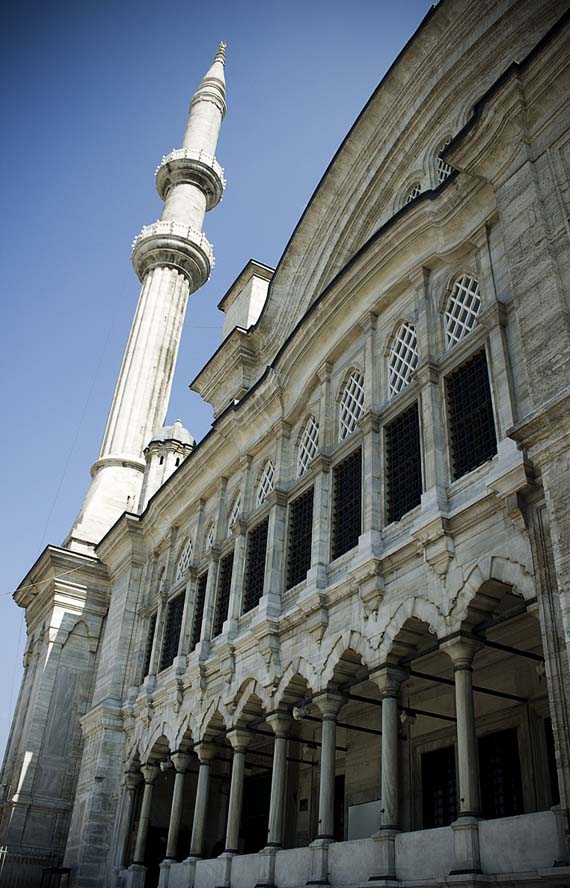 Nuruosmaniye Mosque. Photo by Amar Cudic


Comments
Add a comment
Commenting is not available in this section entry.