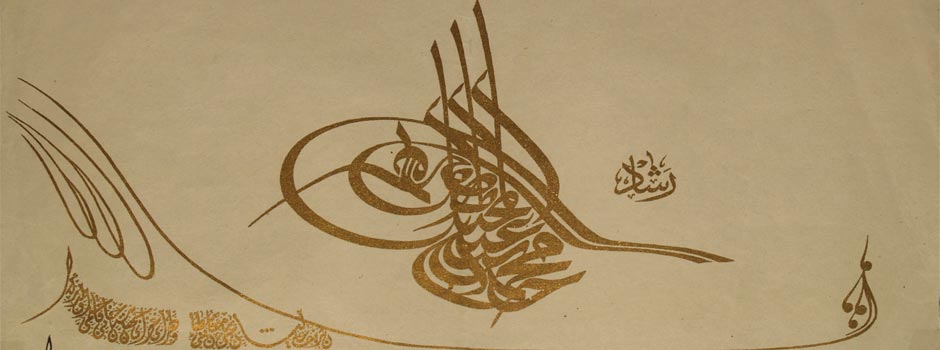
Diwani style, a Calligraphic Arabic Script
Mar 27, 2010 Art History

Keep up to date with IAM's special offers, giveaways and news in your preferred format.
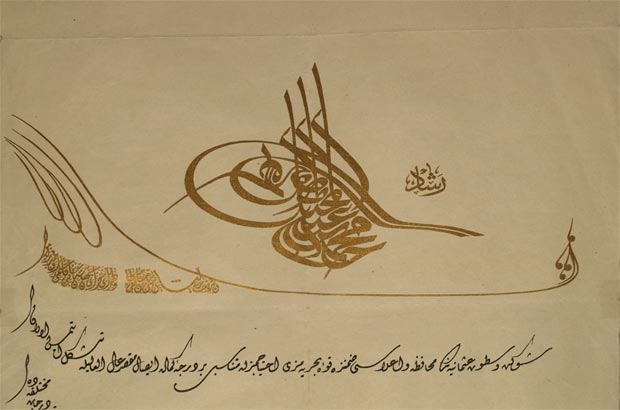 The detail from Tugra from Bosniak Institut in Sarajevo, Bosnia and Herzegovina / Photo by Islamic Arts Magazine
As an Arabic script it is the most decorative. It’s origin comes from of Riqa and Nasta’liq style. Due to its specific layout -being very decorative- it is very difficult to read, especially when it comes to more festive version, called Jeli Diwani style. This style is a very compact way of writing a full diacritical marks, some of which have their function, while others are only decorative.
Documents were often written with gold paint when written in Diwani or Jeli Diwani style. This style reached its first affirmation during the Sultan Fatih’s rule, and its full splendor in the 16th century, when it was additionally modified by famous calligrapher Shaykh Hamidullah. Diwani style was present in the Ottoman diplomatic correspondence until 20th century.
The masters of this calligraphy style were calligraphers: Sami Effendi, Aziz Effendi, Effendi Kjamil, like many other calligraphers who served as scribes in the Ottoman court.
Diwani is marked by beauty and harmony, and accurate small samples are considered more beautiful than larger ones. It has a high artistic value and is still used in the in ceremonies and greeting cards.




Comments
Add a comment